While breathing is an automatic function, how we breathe—through the nose or the mouth—has a significant impact on our health. Mouth breathing, particularly when chronic, is not just a cosmetic or minor concern. It is often a sign of an underlying dysfunction that can lead to serious long-term health consequences, especially in children during growth and development.
What Is Mouth Breathing?
Mouth breathing occurs when the lips remain open, and air is inhaled and exhaled through the mouth instead of the nose. While occasional mouth breathing may be necessary—such as during intense physical exertion or nasal congestion—habitual mouth breathing, especially during sleep, can disrupt normal oral and facial development and impair systemic health.

Health Risks Associated with Mouth Breathing
1. Craniofacial Development and Malocclusion
Chronic mouth breathing during childhood is closely linked to altered facial growth, resulting in longer faces, narrower jaws, and dental malocclusions (misaligned bites). The tongue’s improper resting posture during mouth breathing contributes to these skeletal changes.
“Mouth breathing alters the posture of the tongue and orofacial muscles, contributing to maxillofacial skeletal changes.”
(Harari, D., Redlich, M., Miri, S., Hamud, T., & Gross, M. (2010). American Journal of Orthodontics and Dentofacial Orthopedics)

2. Sleep-Disordered Breathing
Mouth breathing is associated with poor sleep quality and conditions such as obstructive sleep apnea (OSA). It causes a reduction in airway patency, increasing the risk of intermittent oxygen deprivation and leading to daytime fatigue, behavioral issues, and cognitive difficulties.
“Oral breathing during sleep may increase upper airway collapsibility, contributing to sleep-disordered breathing.”
(Guilleminault, C., Huang, Y.-S., Monteyrol, P. J., Sato, R., & Quo, S. (2013). European Journal of Pediatrics)

3. Dental and Periodontal Issues
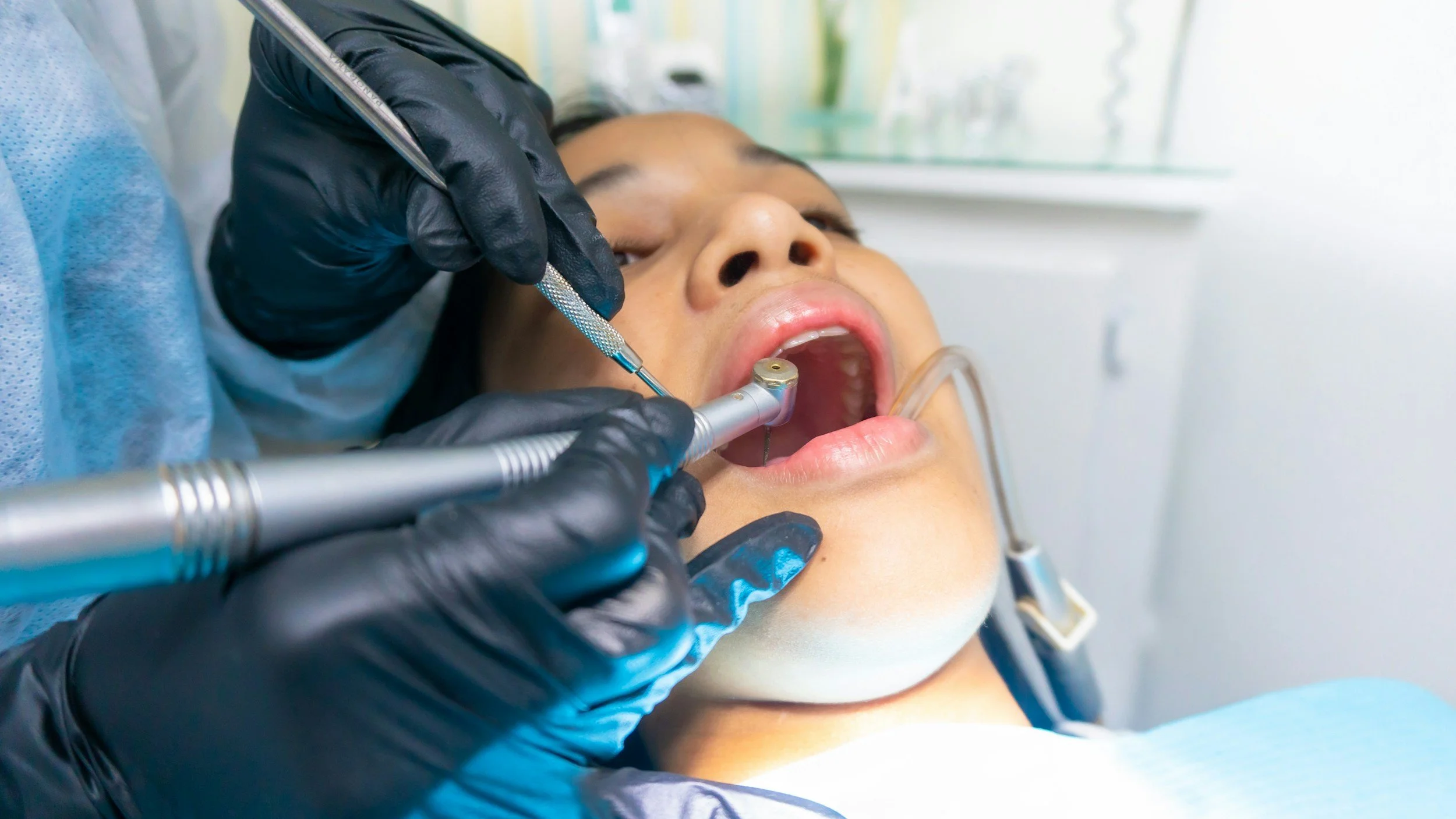
Mouth breathing dries the oral cavity, reducing saliva flow and altering the oral microbiome. This increases the risk for tooth decay, halitosis, gingivitis, and periodontal disease.
“Mouth breathers exhibit significantly lower salivary flow and higher rates of caries and gingival inflammation.”
(Abreu, R. R., Rocha, R. L., Lamounier, J. A., & Guerra, Â. F. (2008). Journal de Pediatria)
4. Postural and Airway Dysfunction
Mouth breathing often leads to forward head posture to compensate for reduced airflow, contributing to neck and shoulder tension, airway obstruction, and overall postural imbalance.
“Breathing pattern disorders such as mouth breathing can influence postural control and head positioning.”
(Sakaguchi, K., et al. (2007). Journal of Physiological Anthropology)
5. Improved Oxygenation and Lung Function
Nasal breathing naturally slows down the breath, allowing the lungs more time to extract oxygen. It also helps maintain ideal carbon dioxide levels, which enhances oxygen delivery to tissues via the Bohr effect—a mechanism that supports efficient energy production throughout the body.
6. Nitric Oxide Production
One of the most significant benefits of nasal breathing is the production of nitric oxide (NO) in the nasal sinuses. Nitric oxide is a powerful vasodilator and antimicrobial molecule that:
Increases blood flow and oxygen uptake in the lungs
Enhances oxygen delivery to cells
Helps reduce blood pressure
Possesses antibacterial, antiviral, and antifungal properties
“Nasal breathing enhances nitric oxide uptake, which plays a critical role in pulmonary function and host defense.”
— Lundberg JO, et al. (1996), Nature Medicine
7. Natural Filtration of Airborne Irritants
The nose is equipped with tiny hair-like structures called cilia, along with mucus, which trap and remove:
Dust particles
Pollen and allergens
Bacteria and viruses
This filtration helps protect the lower respiratory tract, reducing the risk of infections, allergies, and inflammation that often accompany chronic mouth breathing.


Myofunctional Therapy Can Help
Oral myofunctional therapy (OMT) focuses on retraining the muscles of the face, tongue, and airway to promote proper nasal breathing, optimal oral posture, and functional swallowing. By addressing the root cause of mouth breathing, OMT helps improve breathing patterns, sleep quality, facial development, and long-term oral health.

References
Harari, D., Redlich, M., Miri, S., Hamud, T., & Gross, M. (2010). Mouth breathing: an etiological factor of an unfavorable facial growth pattern. American Journal of Orthodontics and Dentofacial Orthopedics, 137(4), 528–534.
https://doi.org/10.1016/j.ajodo.2009.04.019Guilleminault, C., Huang, Y.-S., Monteyrol, P. J., Sato, R., & Quo, S. (2013). Mouth breathing, obstructive sleep apnea, and developmental issues in children. European Journal of Pediatrics, 172(9), 1205–1210.
https://doi.org/10.1007/s00431-013-2020-0Abreu, R. R., Rocha, R. L., Lamounier, J. A., & Guerra, Â. F. (2008). Etiology, clinical manifestations and concurrent findings in mouth-breathing children. Jornal de Pediatria (Rio J.), 84(6), 529–535.
https://doi.org/10.2223/JPED.1836Sakaguchi, K., Matsuo, K., Yamaguchi, T., Nakagawa, T., & Yamada, Y. (2007). Influence of nasal or oral breathing on endurance and postural stability. Journal of Physiological Anthropology, 26(3), 361–366.
https://doi.org/10.2114/jpa2.26.361Lundberg, J. O., Weitzberg, E., & Gladwin, M. T. (2008). The nitrate–nitrite–nitric oxide pathway in physiology and therapeutics. Nature Reviews Drug Discovery, 7(2), 156–167.
https://doi.org/10.1038/nrd2466Lundberg, J. O., Farkas-Szallasi, T., Weitzberg, E., et al. (1995). High nitric oxide production in human paranasal sinuses. Nature Medicine, 1(4), 370–373.
https://doi.org/10.1038/nm0495-370Walker, D. W., & Jennings, D. B. (1995). Respiratory Physiology. In: Shephard RJ, Astrand PO, eds. Endurance in Sport (Vol. II, pp. 77–90). Blackwell Scientific.
Jefferson, Y. (2010). Mouth breathing: adverse effects on facial growth, health, academics, and behavior. General Dentistry, 58(1), 18–25.
[No DOI available; common clinical citation]Louzada, M. L., de Menezes, L. M., & Almeida, R. R. (2005). Breathing mode influence in craniofacial development. Brazilian Journal of Otorhinolaryngology, 71(2), 156–160.
https://doi.org/10.1016/S1808-8694(15)31216-0